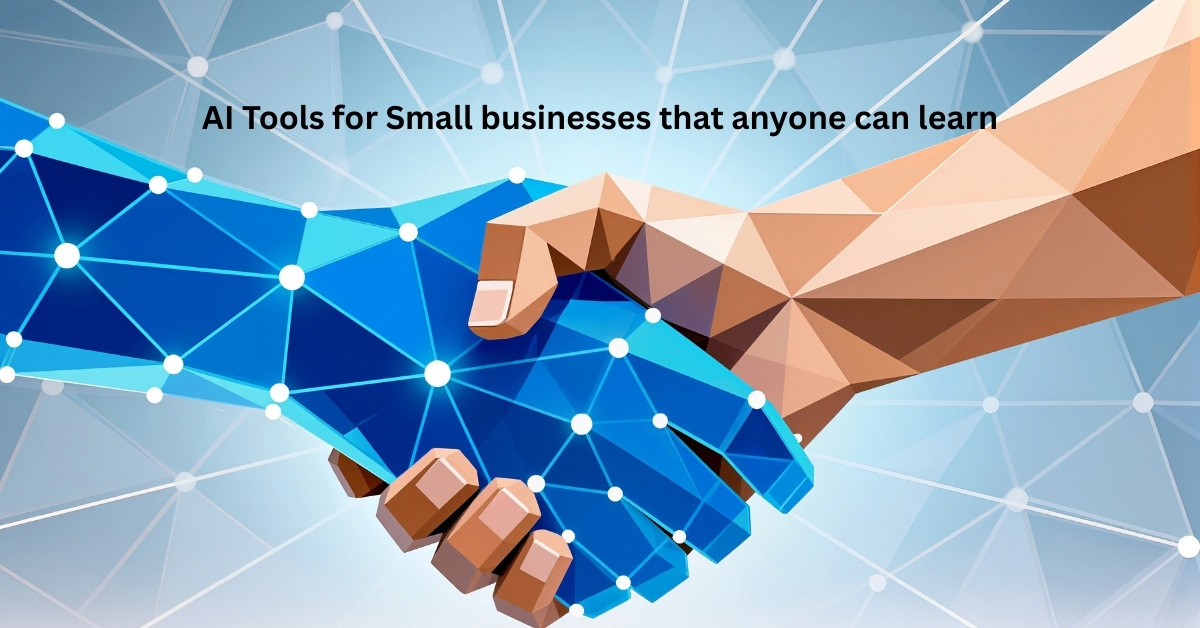
AI Tools for Small businesses that anyone can learn (even during nap time)
I run my business with kids in the background, laundry on delay start and about 2.5 brain cells left by 8pm. I used to assume AI was just for big tech companies but as a small business owner I slowly started testing simple AI tools for small businesses to write emails faster, plan content and sort finances while the kids argued over snacks. This guide is basically my “no-jargon, no-coding” shortcut for busy moms who want real time back, not another complicated system to babysit.
If you feel behind because everyone keeps yelling about AI and you’re just trying to answer messages and pack lunches, this is for you. I’ll walk through specific AI tools, show exactly how I use them in my own business and focus only on things you can understand in under a weekend.
READ: 10 Best Free AI Tools for Everyday Tasks
Why AI Matters for Small businesses right now (especially for moms)
Here’s the big picture so you know this isn’t just hype. Recent research from the U.S. Chamber of Commerce found that 58% of small businesses already use generative AI, up from 40% the year before and more than double from the year before that.
In the UK, one report found only about 15% of small businesses use at least one AI technology but more are planning to test it soon. That gap is an opportunity for small brands like yours to move faster while everyone else is still “thinking about it.”
On the flip side, a survey in 2024 showed 43% of firms had no plans to use AI at all and a big barrier was simply not knowing where to start. If that sounds like you, you’re not late. You’re normal and you’re exactly who this guide is aimed at.
A quick framework: How to pick AI tools without feeling lost
Before we get into specific AI tools for small businesses, here’s the simple filter I use. No diagrams, no “digital transformation” buzzwords.
1. One problem at a time.
Ask, “What drains my energy most this month?”. Emails, content, bookkeeping or customer messages. Start with one problem, not with “AI in general.”
2. Must save time weekly not someday.
If a tool can’t clearly save you at least 1 – 2 hours a week in the first month, it goes back on the shelf. That rule alone keeps you from joining every AI trend on TikTok.
3. Anyone-on-my-team test.
If you can’t explain how to use it to a partner, VA or teen in three steps, it’s too complex for this season of life. We are not adding part-time IT jobs to your plate.
Keep this framework in your notes app and sanity-check every shiny new AI thing against it.
The 3 Starter AI tools I’d pick if you only have 15 minutes a day
There are hundreds of AI tools for small businesses but you do not need hundreds. Here’s the starter stack I’d suggest if your time window for learning is “during Peppa Pig.”
1. A Chat-based AI assistant (your all-purpose brain buddy)
Think of a chat AI tool (like ChatGPT, Gemini or another reputable assistant) as a super patient intern who never rolls their eyes. Research from Zapier and others shows these assistants are now considered core productivity tools for tasks like drafting content, summarising info and brainstorming.
How I use mine in my business as a mom:
Turn bullet-point brain dumps into email drafts.
Outline blog posts and social captions on a topic I already know well.
Summarise long articles or podcasts into key actions.
If you only picked this one type of tool and learned to prompt it well, you’d still get serious time savings.
2. AI Writing and SEO helper
Next, you want something that helps you write faster and be found online. AI-assisted SEO tools now suggest focus keywords, headings and related questions people type into Google, based on live data.
How this looks in real life:
Paste your rough blog idea.
Get suggested headlines, outline sections and “People Also Ask” questions to answer.
Ask the tool to draft a section in your voice, then you edit so it still sounds like you.
This is how I draft long posts while the baby naps and the older kids are asking for snacks every 4 minutes.
3. AI-Powered finance/admin tool
Finally, pick one AI-assisted tool for the boring stuff. Receipts, invoices or basic reports. Many bookkeeping platforms and banking apps now have AI layers that auto-categorise expenses, suggest tags and generate simple trends for you.
This is how you stop dragging a bag of receipts to tax season. AI can read invoices, recognise common vendors and cut down on manual data entry so you’re not doing spreadsheets at midnight.
Coming up: we’ll go deeper into specific AI tools for small businesses in marketing, design, finance and customer support plus small “routines” you can fit into real life.
AI for marketing: More reach, less screen time
Marketing is where many moms feel they “should” be doing more but the day disappears. AI can lower the bar on how long it takes to show up online.
1. Social media support
AI-assisted social tools can:
Suggest captions based on your bullet points.
Turn one long post into multiple shorter ones.
Recommend posting times based on when your audience is active.
Your routine could look like this: once a week, you paste a product story or client win into your AI tool and ask it to turn that into five posts in your tone. Then you spend 15 minutes editing and scheduling instead of starting every caption from scratch.
2. Email and newsletter help
Studies show AI is increasingly used by small businesses for content and marketing tasks because it lowers the time barrier to consistent communication.
Practical uses you can learn in an afternoon:
Generate subject line variations to improve opens.
Turn a long blog post into a short newsletter summary.
Draft a welcome sequence based on a few key points you provide.
You still make the decisions but AI handles the “blank page” problem.
3. Blog and SEO support
AI SEO tools can help you:
Find related topics and questions your customers search.
Group keywords into themes so you’re not writing random content.
Turn research into an outline, so writing feels more like filling in boxes.
Pair this with your own experience (you know your audience best) and you’ll get articles that feel personal and have a real chance at ranking.
AI for design: Visuals that look professional
You do not need to be a designer to have strong visuals anymore. AI design tools are specifically recommended for small and medium-sized businesses that want polished graphics with minimal skill.
1. Templates with AI help
Modern design platforms offer:
Auto-generated layouts from a few prompts.
Automatic resizing of graphics for different platforms.
Background removal and simple photo tweaks.
Here’s how a busy mom might use this: you open a product shot, ask the tool to suggest three on-brand social post designs, then swap in your own text and colors. It feels like having a designer on call, without the invoice.
2. Brand consistency on fast forward
Many tools allow you to save colors, fonts and logo so every visual feels like part of the same family. AI then suggests designs that stay inside that style.
That means your Instagram, website and email banners look consistent, even if you worked on them at odd times of night. Consistency makes your business look bigger and more established than it is.
AI for Admin, Finance and everyday operations
Time spent on admin is time you’re not spending on product, clients or (honestly) sitting down for five minutes.
1. Invoices, expenses and reports
Guides from small business banks and hubs now highlight AI-assisted finance tools as one of the most valuable categories for owners.
What these tools can do for you:
Scan receipts from your phone and log them automatically.
Suggest categories for expenses so reports are easier.
Summarise monthly income and outgoings so you see trends quickly.
You don’t need to understand complex accounting terms; you just need a dashboard that says “This is up, this is down.”
2. Scheduling, reminders and inbox support
AI assistants can help manage calendars, set reminders and draft responses to routine messages.
Sample routine:
At the start of the week, ask your assistant to scan your inbox for anything that looks like a client request or invoice.
Have it summarise them in a short list.
Then you respond or schedule tasks instead of digging through everything manually.
It is like having a part-time operations manager who never forgets things.
3. Operations and workflow automation
More advanced tools can connect your apps so that when one thing happens, another thing triggers automatically. For example: new order in your shop → new row in your spreadsheet → follow-up email queued.
Research and case studies show that this style of workflow automation can save teams 20 – 30 hours a week across departments. Even if your business is just you plus a toddler on your hip, saving two hours is a very big deal.

AI for Customer service and human connection
One of the biggest fears small business owners have is “Will this feel robotic?” The good news is you control where AI sits and where humans stay front and centre.
1. Simple chatbots and FAQ support
AI chatbots can handle common questions like shipping, hours or basic product details, especially outside your working hours. Sources from small business development centres and telecom providers list chatbots as a key early use of AI for small firms.
You can set them up to answer basic questions first and pass complex issues to you by email. That way customers feel looked after, even while you’re reading bedtime stories.
2. Sentiment and feedback analysis
AI tools can scan reviews, comments and messages to spot patterns in customer mood.
This helps you:
Notice recurring complaints or praise.
Decide which product to improve next.
Catch tiny fires early instead of finding out after people stop buying.
Think of it as having someone highlight all the most important lines in a hundred reviews for you.
3. Keeping the human touch
Experts point out that small businesses get the best results when they use AI to handle repetitive tasks while keeping real relationships at the front.
So you might:
Use AI to draft the first version of a response, then add your tone and personal touches.
Let bots handle tracking numbers and passwords, while you personally reply to bigger questions.
Be transparent in your FAQs about where you use automation.
That balance protects the warmth of your brand and still gives you your time back.
Tiny AI Routines for busy moms (realistically)
Instead of aiming for a massive overhaul, build small habits.
Morning: 10 minutes
Ask your AI chat assistant for a one paragraph summary of relevant industry news.
Paste a product idea and get three angles for a social post.
Schedule one post based on that.
Naptime or after bedtime: 20 – 30 minutes
Use your AI SEO tool to draft an outline for a blog.
Dictate your thoughts into it and have the assistant tidy the wording.
Save a rough draft for later editing.
Friday admin hour
Upload receipts to your AI-assisted finance tool.
Generate a short summary of weekly sales and costs.
Ask for three quick ideas to improve conversion or reduce a specific expense next week.
Small, repeatable routines win over big one-off projects every time.
How to decide if an AI tool is worth paying for
Before you put card details in, do this quick check.
- Time test.
Ask: “How many minutes will this save me each week?” Estimate honestly and multiply by a month. - Headspace test.
If a tool removes a task you dread (invoices, first drafts, inbox sorting), that also has value, even if the minutes saved are small. - Hand-off test.
Could a VA or team member run this with a simple SOP you write in 15 minutes? If yes, it’s scaling potential, not just personal convenience.
If a paid AI tool fails all three tests, keep looking or stick to free tiers for now.
Common mistakes small businesses make with AI
A lot of small firms are still figuring this out. Surveys show many struggle not with the tools themselves but with practical implementation and data quality.
Here are pitfalls to dodge:
Adding five tools at once instead of mastering one.
Letting AI publish content without your review, risking wrong facts or off-brand tone.
Ignoring basic data hygiene (messy tags, duplicate contacts), which weakens AI insights.
Your strategy can be simple: start small, review outputs and treat AI as an assistant, not a decision-maker.
Ideas for keeping readers on your site
As you share AI tools for small businesses, keep pointing readers to related posts that deepen their learning.
Examples you can weave in naturally:
“If you’re stuck on brand voice, read my guide to sounding like yourself online.”
“Need help with content planning? I have a full monthly content calendar you can swipe.”
“Ready to sort your finances too? Head to my simple bookkeeping checklist for busy moms.”
These links help real humans but they also signal to search engines that your site covers a topic in depth.
FAQs
These questions are based on common “People Also Ask” results and top guides on using AI for small business growth.
1. How can small businesses start using AI with no tech skills?
Most experts recommend starting with easy, low-risk use cases like content drafting, email support and basic automation. Choose one chat-based AI assistant and one tool tied to a daily task, then use them consistently for a month so you can see clear time savings.
2. What are the best AI tools for small businesses on a budget?
Guides for small firms often point to AI chat assistants, design tools with AI features and finance tools that offer AI-powered insights as high-value options. Many of these have generous free tiers or low-cost plans so you can test them before committing.
3. Do I need to know coding to use AI tools?
No. Most modern AI tools for small businesses are built with interfaces that feel like regular apps, with prompts and buttons instead of code. If you can type a message, upload a file and follow a short tutorial, you can get results.
4. How can AI help my small business grow?
Research from business groups shows AI helps small companies save time, improve marketing and make better decisions from data. It can support growth by automating repetitive tasks, suggesting new opportunities and freeing you to focus on high-value work and customer relationships.
5. How do I use AI without losing the personal touch in my business?
Advisers suggest using AI for background tasks like drafting, sorting or data analysis while you keep humans involved in final decisions and customer-facing moments. Be honest with customers about where automation helps you and use the extra time to be more present in the parts that require empathy and judgment.
You don’t need to master every new AI launch. You just need to pick one small problem in your business and test one tool this week so tap one of the options above, start your first trial and claim back a few precious hours for both your business and your family.